The Italian Pantry
What to buy, and what you can swap
A short list of staples that do most of the work in Italian cooking.
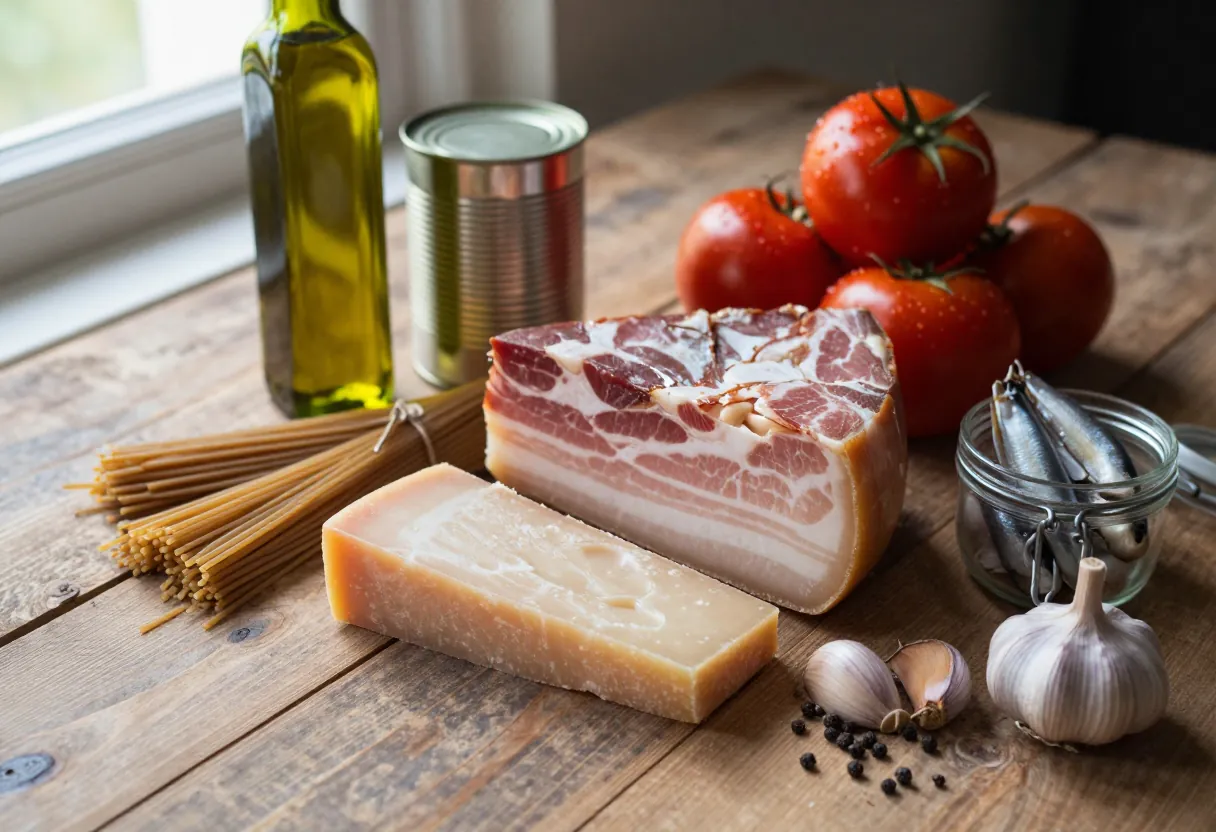
AI-generated photo.
Guanciale, pancetta or bacon?
Guanciale is cured pork cheek, with lots of silky fat and a deep, slightly funky flavor. It's traditional for carbonara and amatriciana. Pancetta is cured pork belly, milder and the easiest substitute. Bacon is usually smoked, which changes the flavor, so choose unsmoked if you can.
Pecorino Romano or Parmigiano-Reggiano?
Pecorino Romano is made from sheep's milk, sharp and quite salty. Parmigiano-Reggiano is made from cow's milk, nutty and more mellow. Rome leans towards pecorino, and many northern dishes lean towards Parmigiano. Buy wedges and grate them yourself.
Olive oil
Keep two bottles. Use a reasonably priced extra-virgin oil for cooking and a better one for finishing. Look for a recent harvest date and a dark bottle, keep it away from the stove, and use it up within a few months of opening.
Canned tomatoes
Whole peeled tomatoes are the most useful, because you can crush them to the texture you want. San Marzano tomatoes are a respected variety. Certified ones carry a DOP mark, though a good regular brand can taste just as nice. Judge by taste, and find one you like.
Dried pasta
Bronze-cut pasta has a rough surface that holds sauce well, and it's worth trying. Use short shapes with ridges for chunky sauces, and long strands for oil, cream and light tomato sauces. Cook it in well-salted water and always save some of the water.
Anchovies
They melt into oil and add savory depth without tasting fishy. Oil-packed fillets are the easiest to use. Start with one or two in tomato sauce or with garlic and oil, and nobody needs to know.
Capers
Salt-packed capers have the best flavor but need rinsing. Brined capers are easier and work well. Drain them before using, and taste your dish before adding more salt.
Black pepper
Whole peppercorns lose flavor much more slowly than ground pepper. Crack them just before cooking. For cacio e pepe and carbonara, go coarse and toast them briefly.