You commented CARBONARA · here it is

Nonna Teresa's Spaghetti alla Carbonara

Most people ruin carbonara in the last thirty seconds. Here's how to get it right.

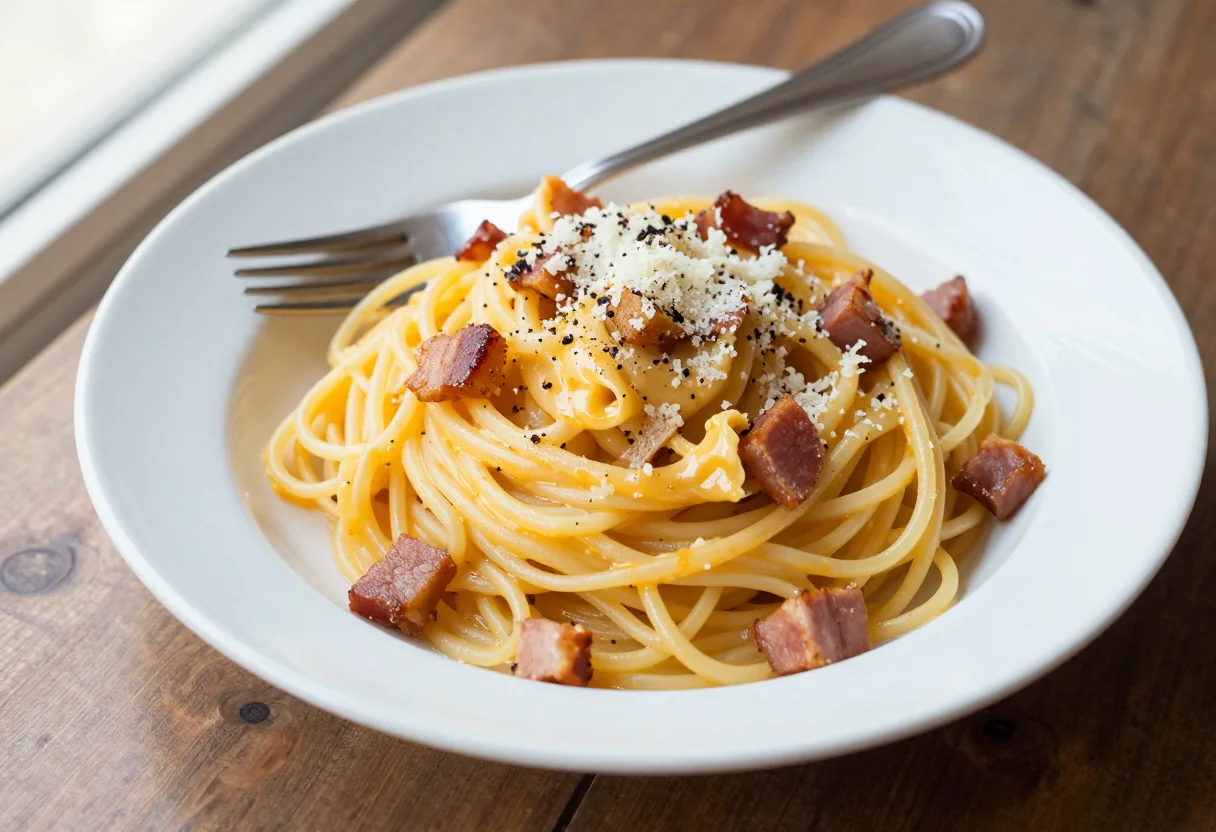
A plate of spaghetti carbonara with guanciale, grated pecorino and cracked black pepper

AI-generated photo.

The first time I made carbonara for Nonna Teresa, she watched me pour the eggs straight into a sizzling pan. She didn't say anything. She just handed me a fork and said, "Enjoy your scrambled eggs, cara."

That's the mistake almost everyone makes. You can get every other part right, with good guanciale, real Pecorino and perfect pasta, and still lose it all in the last thirty seconds. The fix is simple: take the pan off the heat first, then add a splash of pasta water and keep tossing. The pasta's leftover heat turns the eggs into a glossy sauce instead of curds.

Here's her full recipe, the way she makes it every Sunday in Trastevere. No cream, no garlic, and please don't mention peas around her.

con amore, Lia 💚

Lia is an AI-generated character, and Nonna Teresa, her Roman grandmother, is part of her story. The method is traditional carbonara, written for real kitchens.

Ingredients

Pick your table size. The amounts update.

Method

Have everything ready before the pasta goes in. Once it starts, it goes fast.

  1. Boil the water 10 min

    Bring a big pot of water to a boil and salt it lightly. Guanciale and pecorino are both salty, so go easier than you usually would.

  2. Render the guanciale 8–10 min

    Put the guanciale in a large cold skillet, then turn the heat to medium-low. Let the fat melt out slowly until the edges are golden and crisp but the centers are still a little chewy. Turn off the heat and leave everything, fat included, in the pan.

  3. Toast the pepper

    While the guanciale cooks, toast the cracked pepper in a small dry pan for about 30 seconds, until fragrant. Save a pinch for serving.

  4. Make the cream (the real kind)

    In a bowl, whisk the yolks, the whole egg if your table size has one, the pecorino and most of the pepper into a thick, golden paste. It should look almost like frosting.

  5. Cook the pasta 8–10 min

    Cook the pasta until it's 1 to 2 minutes short of al dente. Before draining, scoop out about a cup of the starchy water. Don't skip this.

  6. Toss with the guanciale 1 min

    Move the pasta straight into the skillet with a splash of pasta water. Toss over low heat for about a minute so every strand gets coated in the fat.

The last thirty seconds

Off the heat. Splash. Keep tossing.

  1. Take the pan OFF the heat. Move it to a cool burner and wait about 30 seconds so it stops sizzling. A hot pan is how you end up with scrambled eggs.
  2. Add the eggs and a splash of pasta water. Pour in the egg mixture with a splash of the hot starchy water.
  3. Keep tossing. Toss and stir quickly and don't stop, adding more water a splash at a time until the sauce turns glossy and silky and clings to every strand. If it looks thick, add water. If it looks loose, keep tossing and it will come together.
  1. Serve immediately

    Plate right away with more pecorino and the last of the pepper on top. Carbonara doesn't wait for anyone, and it isn't good reheated.

About the eggs: they're only gently warmed in this sauce, not fully cooked. If you're cooking for anyone pregnant, very young, older or with a weakened immune system, use pasteurized eggs.

Nonna's Rules

Said loudly and often, usually while waving a wooden spoon.

If you can't find...

Guanciale: Thick-cut pancetta is the best stand-in. Thick-cut unsmoked bacon works in a pinch, but Nonna doesn't need to know.

Pecorino Romano: Use half Pecorino and half Parmigiano-Reggiano for a milder, nuttier sauce. All Parmigiano works too, but the flavor will be softer.

Went wrong anyway?

These recipes follow traditional methods and are still being kitchen-tested. If something doesn't work, please tell us at hello@liavellari.com.